DEER BEETLE
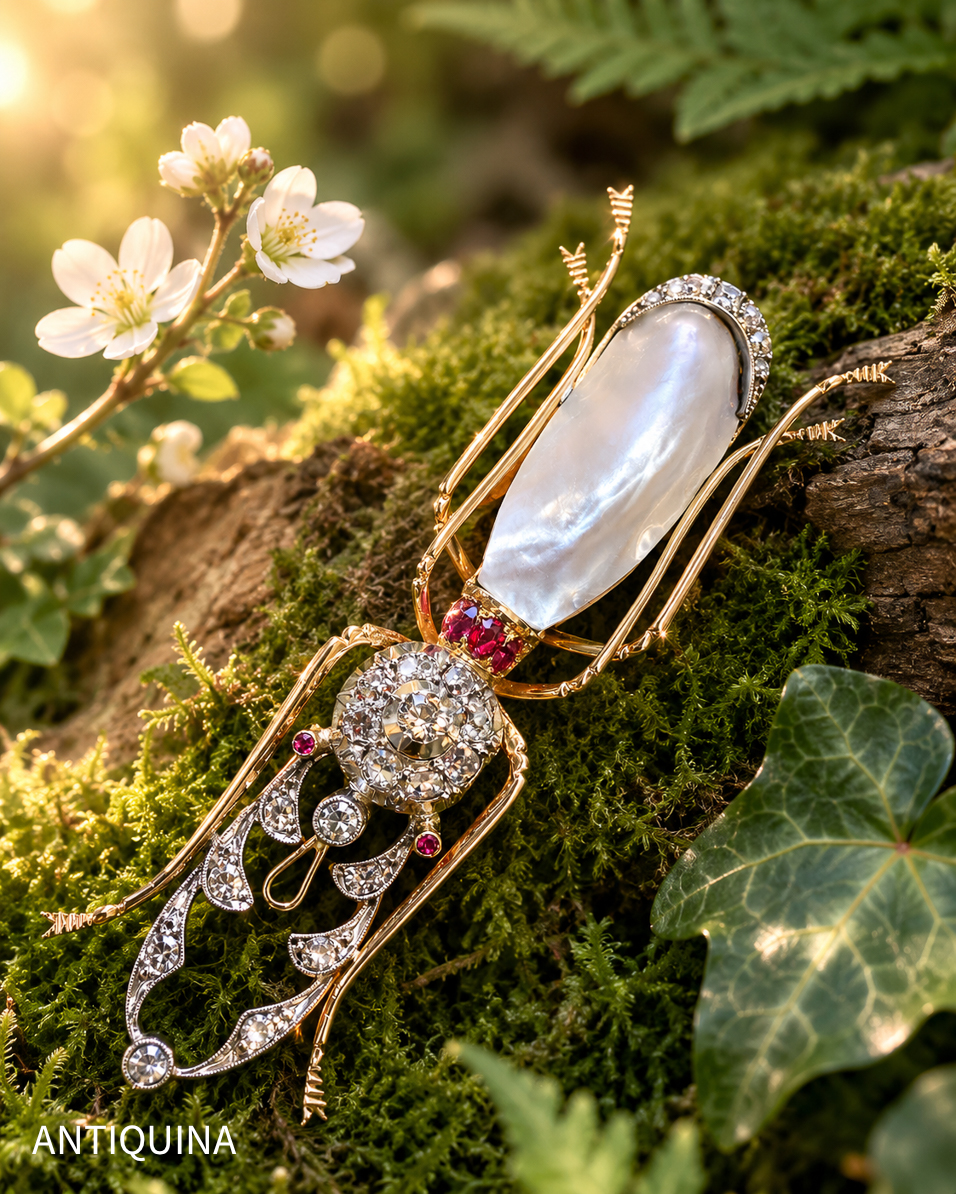
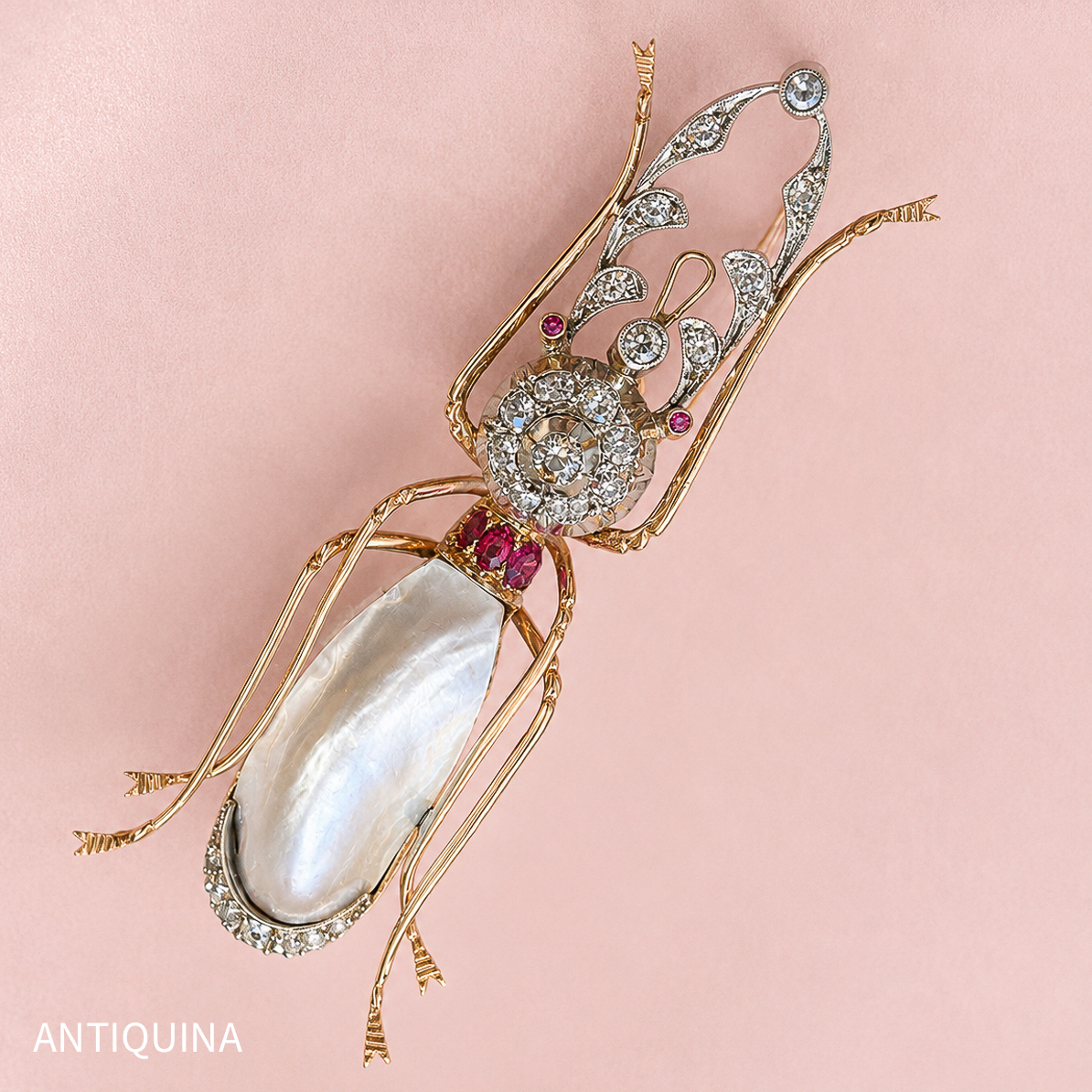
Large antique stag beetle brooch, circa 1900 St. Petersburg
- Order number: r3984 Persönlichen Beratungtermin
vor Ort in Regensburg buchen
Antique Stag Beetle Brooch – Abraham Beilin, St. Petersburg 1908:
Art Nouveau | 14-karat gold & silver | natural blister pearl, diamonds & rubies:
An extraordinary, museum-quality collector’s piece of Russian goldsmithing from the turn of the century:
This impressive stag beetle brooch from St. Petersburg, dating from 1908, combines the Art Nouveau movement’s deep enthusiasm for nature
with the opulent use of materials and forms characteristic of significant Russian jewelry art.
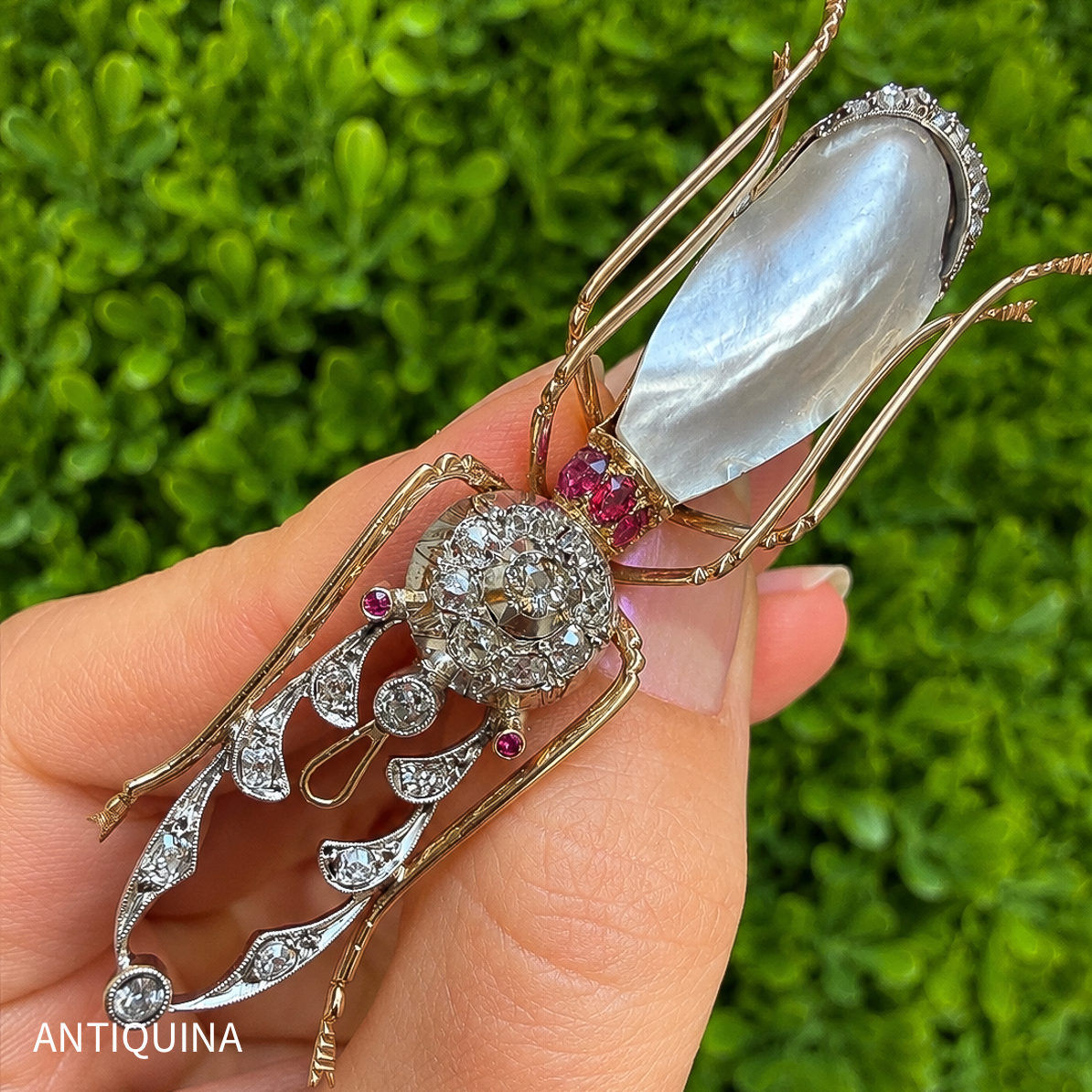
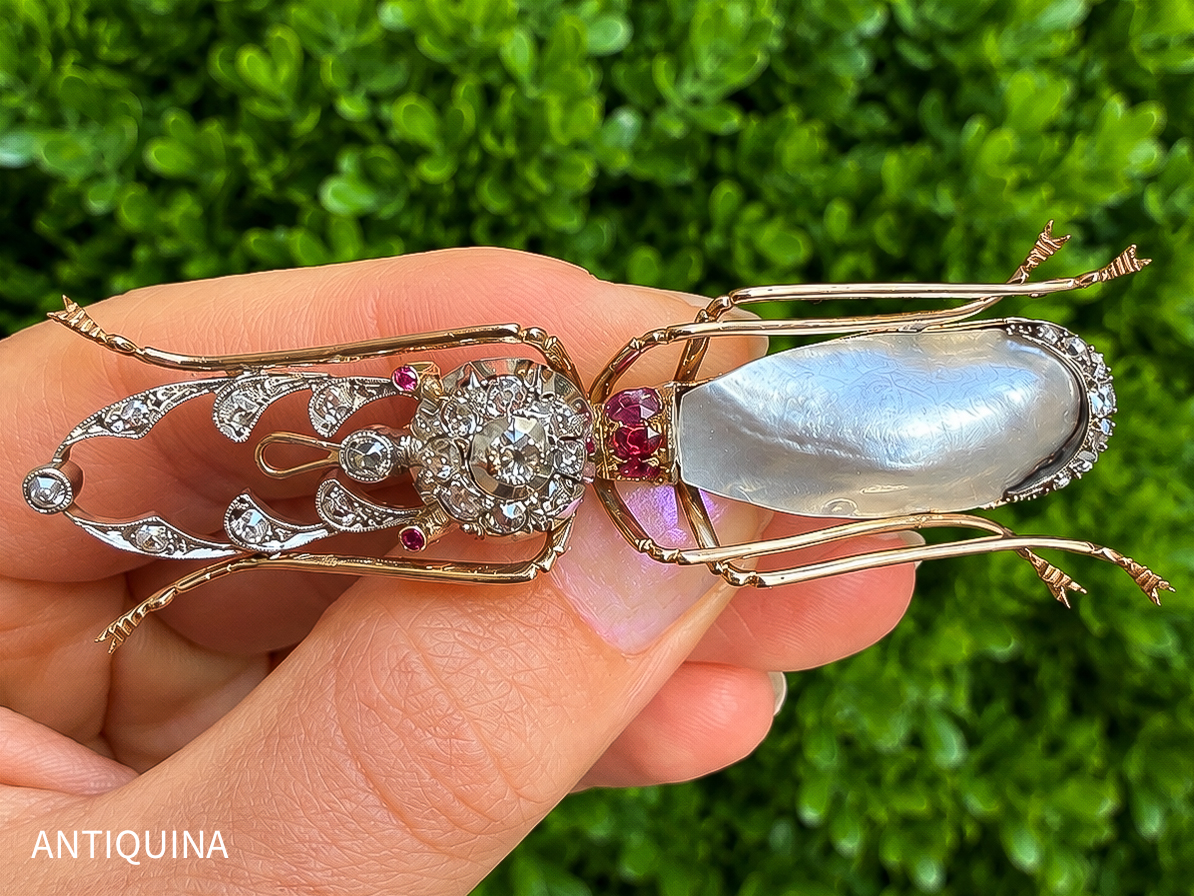
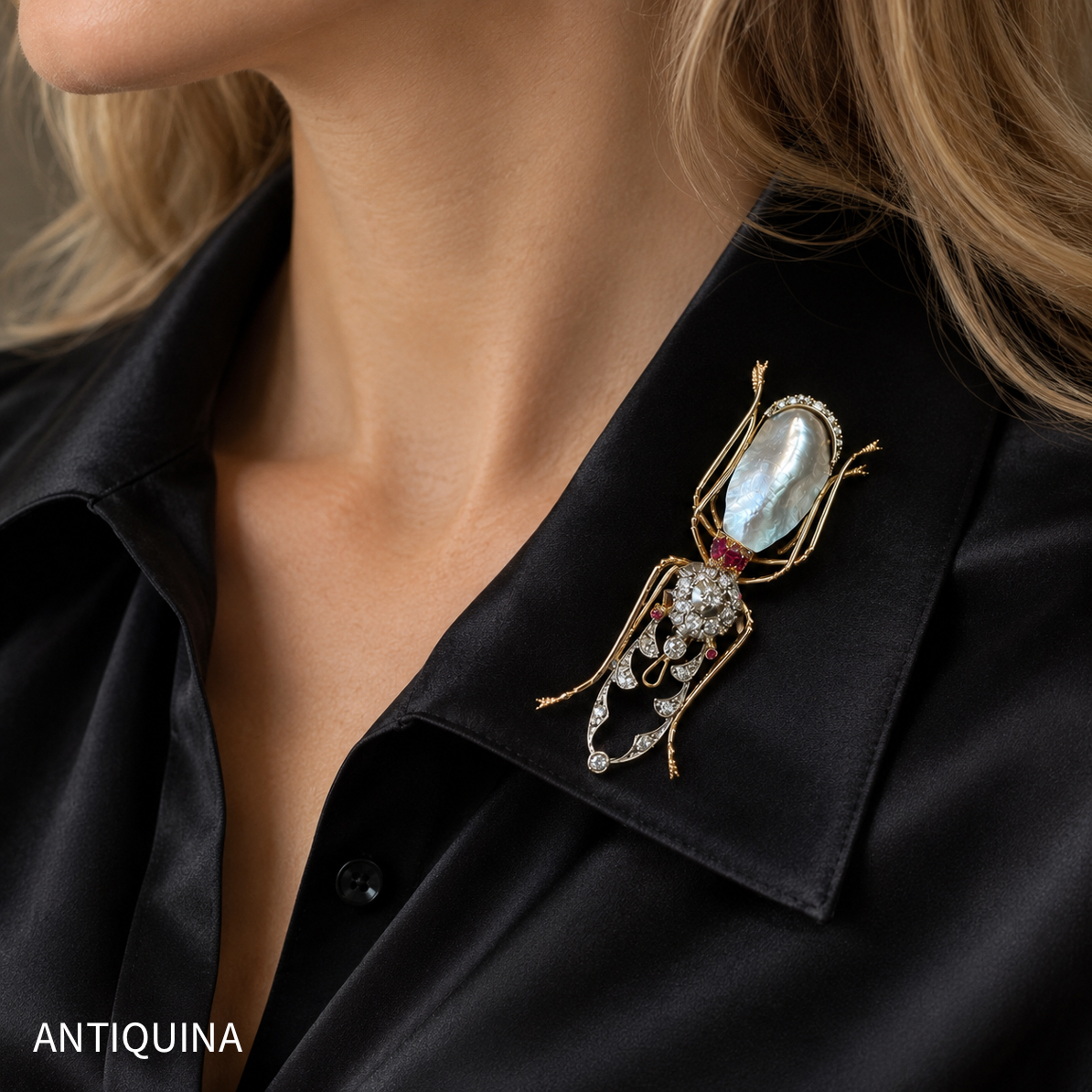
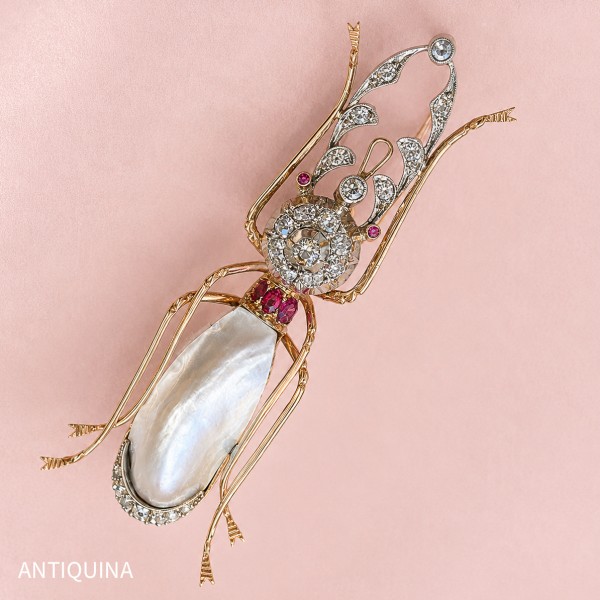
With a remarkable total length of approximately 7.4 cm, the beetle has an impressive presence.
At the same time, its craftsmanship is exceptionally delicate and rich in detail:
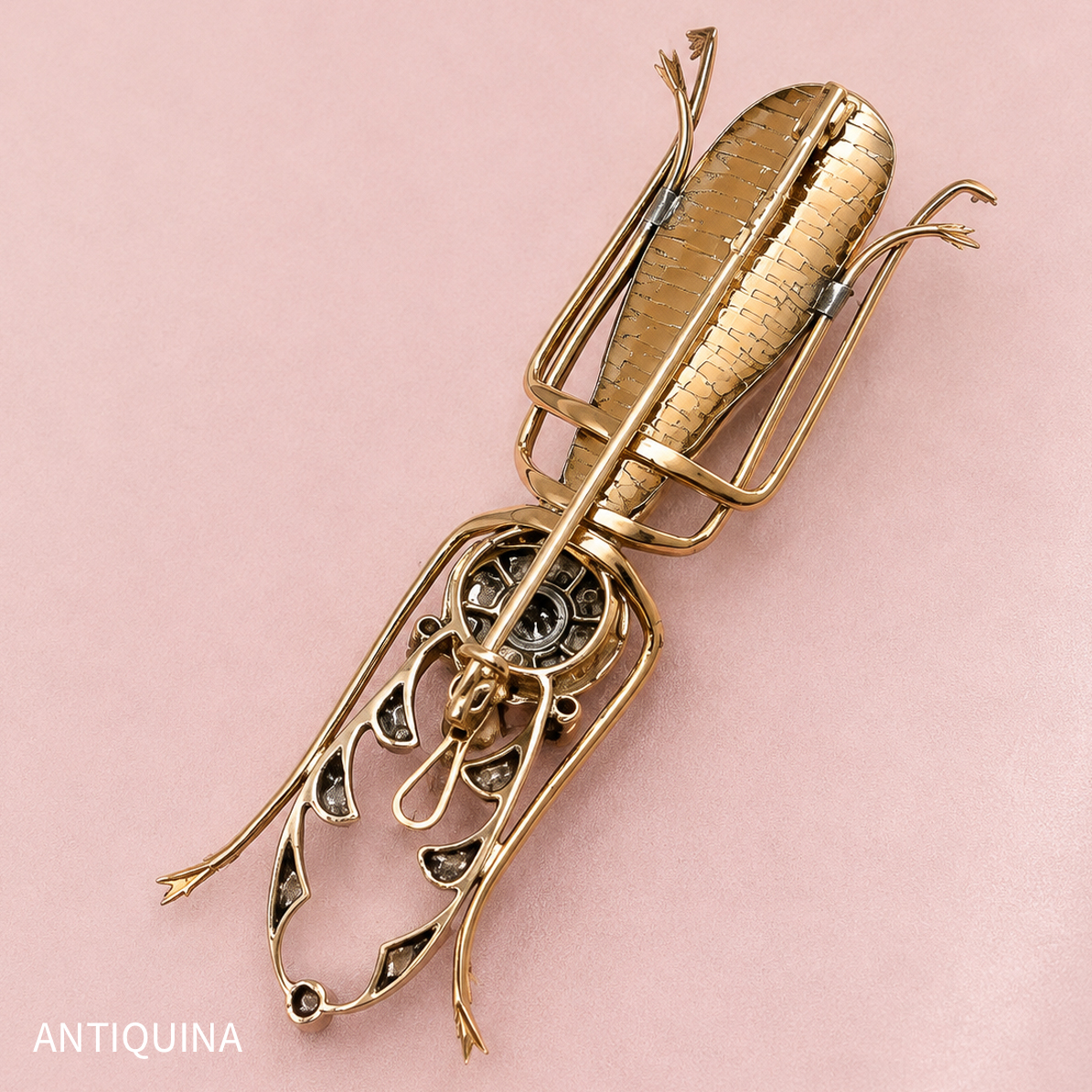
The long, seemingly flexible legs, the delicate antennae, and the intricately designed body
give the piece a strikingly naturalistic appearance.
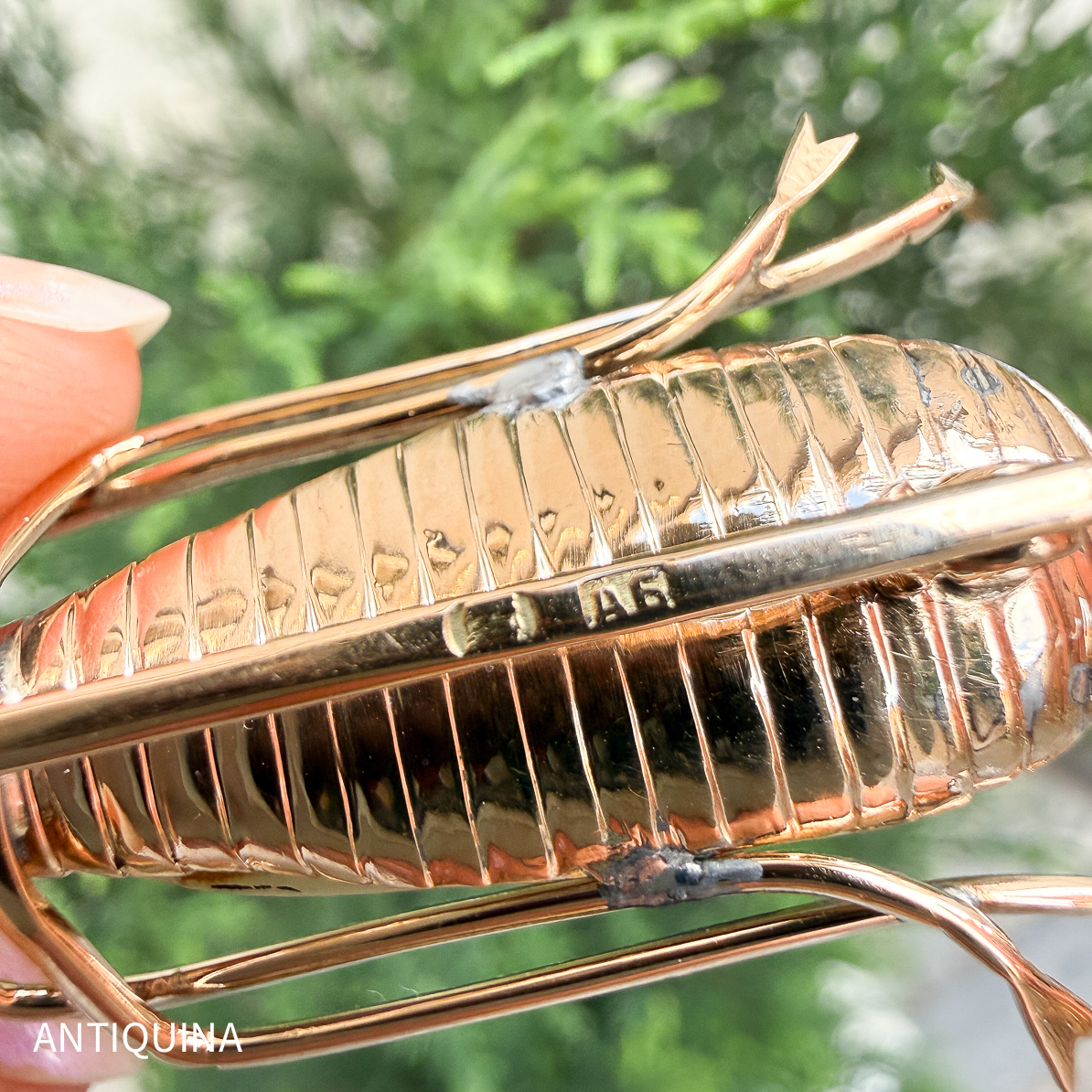
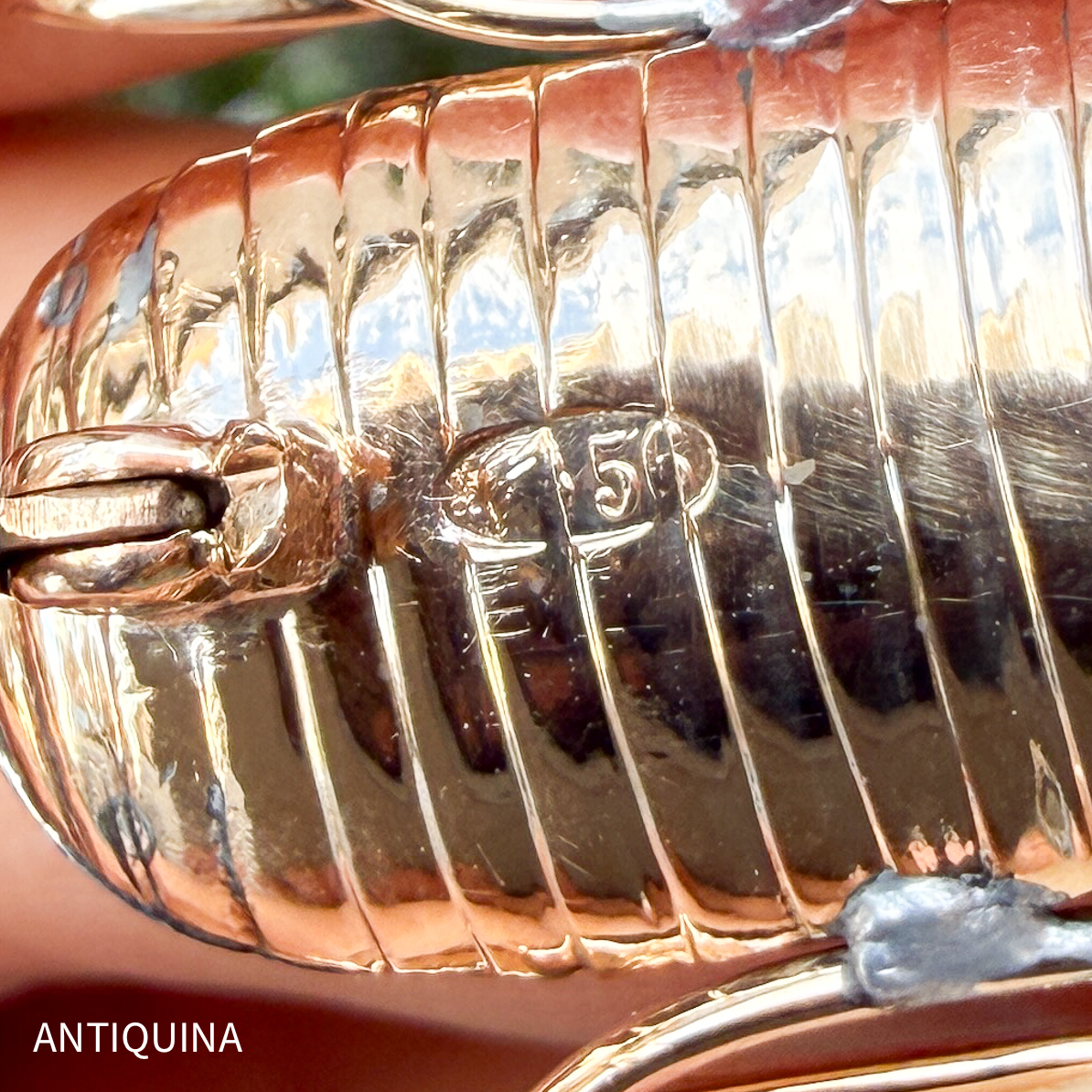
Particularly noteworthy is the brooch’s hallmark, bearing the master’s mark of the St. Petersburg goldsmith Abraham Beilin.
This is therefore not merely a stylistic attribution, but a work by Beilin that bears his hallmark.
Abraham Beilin was one of the most respected goldsmiths in pre-revolutionary St. Petersburg and
worked, among others, for the world-famous House of Fabergé.
This brooch was thus created in one of the most important centers of European goldsmithing of that era and
in the immediate vicinity of those outstanding St. Petersburg workshops whose works are highly prized and collected internationally today.
Exceptional materials:
The stag beetle is crafted in 14-karat gold.
The diamond-set sections were partially executed in silver, as was typical of the period.
This combination of warm gold and bright silver was particularly popular in high-quality jewelry of the late 19th and
early 20th centuries, as the light-colored setting highlights the fire and brilliance of the diamonds particularly effectively.
The piece features diamonds totaling approximately 1.00 ct.
They form a magnificent, ornamental composition, particularly in the lower section of the beetle, and
give the piece a lively sparkle with every movement.
Delicate faceted rubies add intense red accents and create a charming contrast to the gold and
the sparkling white diamonds.
However, the beetle’s large, brightly shimmering body deserves special attention.
It is formed by an exceptionally large natural blister pearl.
Its elongated, organic shape blends perfectly with the insect’s form.
The delicate, iridescent luster, with its silvery-white and slightly bluish reflections, lends the beetle a fascinating vitality.
It is precisely the use of a naturally formed blister pearl that underscores the piece’s unique character:
Nature itself dictates the shape, surface, and sheen, and through the goldsmith’s craftsmanship, it is elevated to the central design element.
Insect jewelry and Art Nouveau’s enthusiasm for nature:
Around 1900, insects were among the most fascinating motifs in jewelry art.
Beetles, dragonflies, butterflies, bees, and other insects offered the goldsmiths of the Belle Époque and
the Art Nouveau period an ideal opportunity to combine naturalistic forms with precious and unusual materials.
Art Nouveau, in particular, elevated nature to one of its most important sources of inspiration.
Instead of strictly geometric forms, the focus was on flowing lines, plants, animals, and organic structures.
Pearls, gemstones, and precious metals of various colors were used not only for their material value,
sbut above all for their natural colors and surfaces.
This philosophy is particularly strikingly evident in this stag beetle.
The natural blister pearl is not merely used as a gemstone, but is itself an essential component
of the insect’s anatomy. Gold, silver, diamonds, and rubies complement this natural form to create a small, three-dimensional sculpture.
An extraordinary collector’s item:
In addition to its art-historical quality, its size of approximately 7.4 cm is particularly remarkable.
This gives the stag beetle a presence that far exceeds that of an ordinary insect brooch.
Added to this are the precious materials, the extremely elaborate craftsmanship, its St. Petersburg origin,
and, in particular, the master’s mark of Abraham Beilin and his documented connection to the House of Fabergé.
The condition is very good for a piece of jewelry of this age.
This is particularly noteworthy given the exceptionally delicate construction with its slender legs,
antennae, and numerous settings, this is particularly noteworthy.
A piece of jewelry for the discerning collector that captivates equally as a historical treasure,
an artistic miniature sculpture, and a testament to the outstanding St. Petersburg goldsmithing of the early 20th century.
The antique stag beetle brooch is in very good condition with minor age-related signs of wear.
Materials: , 14-karat gold and silver, natural blister pearl, faceted rubies, diamonds totaling approx. 1.00 ct, hallmarked with Abraham Beilin’s master mark “ ”
Dimensions in cm: Total length: 7.4
Provenance: St. Petersburg, Russia, 1908
Our jewelry is delivered gift-ready and lovingly packaged with a certificate of authenticity.